Sustainability in Everyday Kita Life: Making Environmental Education Playful · Lohbekpark, Lokstedt
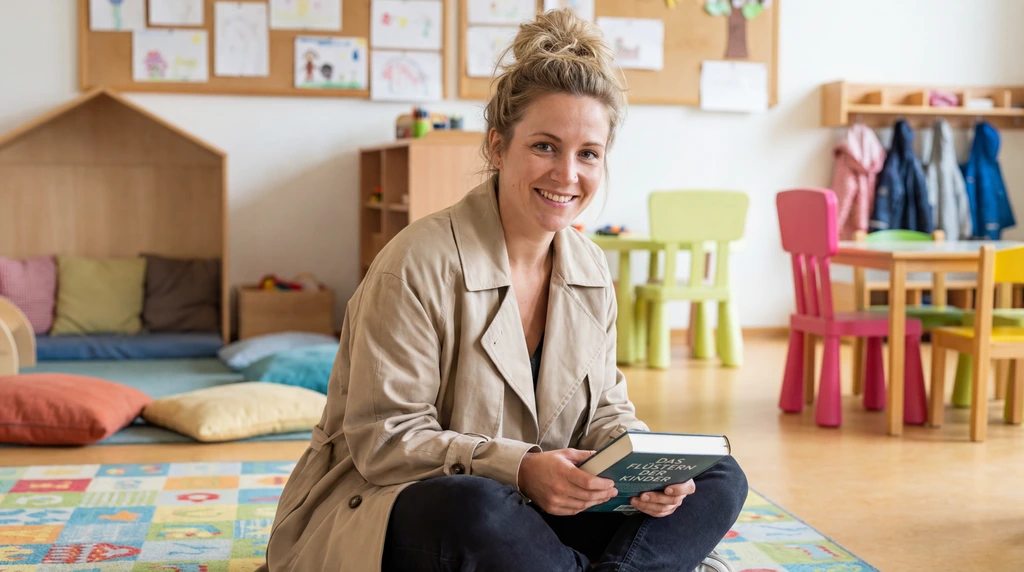 Arianne Vogt
From our kita in Lokstedt: This guide applies across Hamburg. For families in Lokstedt and nearby, we – the Stadtküken nature kita Lohbekpark at Lohkoppelweg 35b – are here in person too. Meet kita Lohbekpark.
Sustainability in Everyday Kita Life: The Complete Overview – Lokstedt
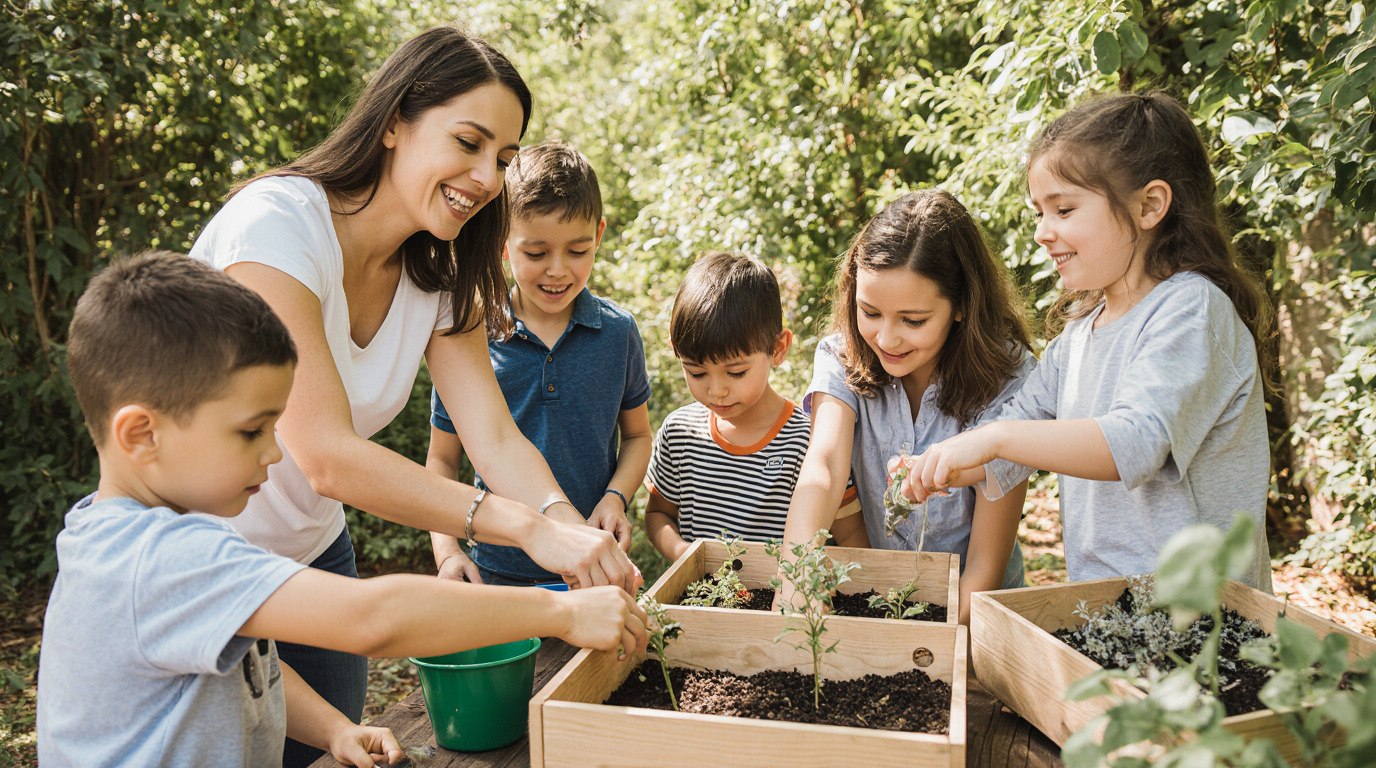
In short: Sustainability at daycare works best when it's playful – through waste separation, garden projects, and natural materials instead of finger-wagging. That's how children grow into a generation of little changemakers.
🧭 Navigation & terminology
Contents:
- Basics & relevance
- Approaches compared
- Step-by-step process
- Perspectives & expert check
- Strategic pros and cons
- FAQ & decision help
Key terms:
- ESD (Education for Sustainable Development): An educational concept that helps children develop environmental awareness, responsibility, and sustainable behavior as a natural part of everyday life from an early age.
- Upcycling: Creatively reusing supposed waste materials (e.g. milk cartons, cans) to make new, useful, or decorative objects instead of simply throwing them away.
1. Why sustainability in daycare matters more than ever
Environmental awareness doesn't start in school. Children develop a sense of their environment as early as their Kita years, and facilities that focus on environmental education make an active contribution to Education for Sustainable Development (ESD). Sustainability at daycare is therefore far more than a buzzword – it's a living educational concept that lets children grasp connections best through their own experience: separating waste in the group room, craft projects with "trash," growing vegetables in the Kita garden, or "lights out" games to save energy.
Evolution & trends
More and more Kitas see sustainability not as a tiresome duty but as a journey of discovery. The trend is clearly toward practical natural materials in daycare – stones, wood, and chestnuts are increasingly replacing plastic toys – as well as fixed rituals like forest days. The topic of climate protection for children is also gaining importance: energy-guardian games and saving water while brushing teeth are becoming a fixed part of the daily routine.
Sustainability in everyday Kita life: When sustainability isn't taught but conveyed through discovery, wonder, and participation, it naturally becomes part of everyday life. More on sustainable everyday life at Stadtküken.
2. Approaches to environmental education compared
A deeper understanding of the different approaches helps parents and educators choose the right format for everyday Kita life. The following overview shows the most common building blocks.
| Approach / activity | Focus / target group | Main advantage | Complexity |
|---|---|---|---|
| Waste separation & recycling | All age groups from infant care onward | Low-threshold, immediately applicable to everyday life | Low |
| Garden projects & natural materials | Kindergarten children (ages 3-6) | Direct nature experience, promotes fine motor skills | Medium (requires outdoor space) |
| Upcycling projects | Kindergarten children (ages 3-6) | Combines creativity with resource conservation | Medium |
| Climate games & energy guardians | Pre-school children | Playfully conveys more abstract concepts like saving energy | High (requires guidance) |
3. Step by step: how sustainability works in everyday Kita life
A systematic yet playful approach ensures that sustainability becomes permanently anchored in everyday Kita life – without finger-wagging.
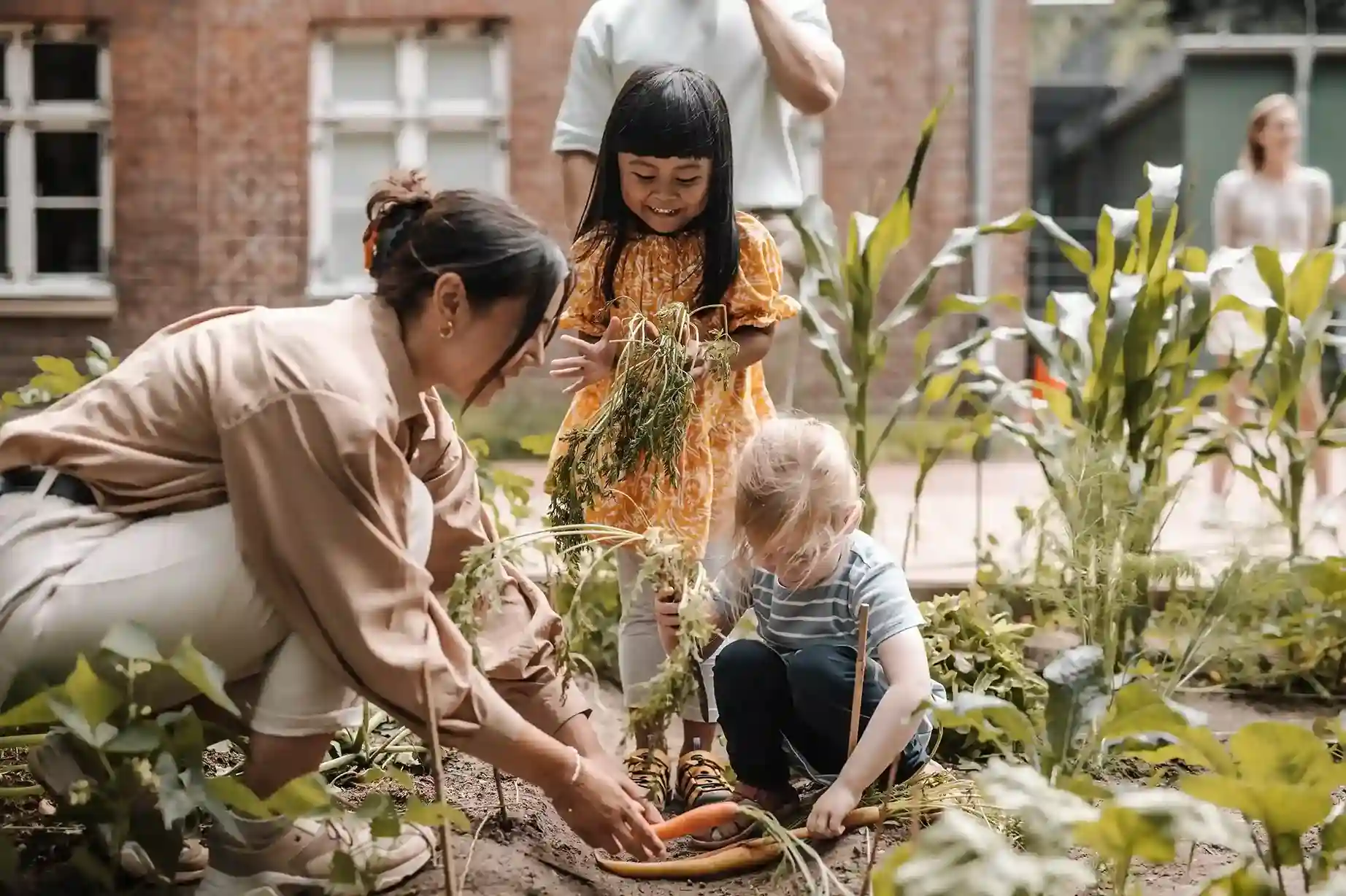 Caption: Colour-coded waste separation makes recycling tangible for children – and fun at the same time.
- Quick checklist for a sustainable Kita routine:
- Colour-coded bins set up in the group room
- A small garden bed or raised bed for vegetables/herbs established
- A collection box for craft materials ("trash") set up
- A swap shelf for clothes or toys organised
- Create everyday relevance: Start with small, tangible rituals – saving paper while drawing, turning off the lights when leaving a room.
- Let children experience nature: Trips to the forest or walks in the park show children that nature is something valuable worth protecting.
- Let them do it themselves: Sorting waste, watering, crafting, and repairing make sustainability tangible for children rather than just explained.
- Introduce upcycling: Milk cartons become lanterns, cans become musical instruments – children learn that what we'd otherwise throw away can still be useful.
Careful, no finger-wagging: Sustainability only works if it doesn't come across as deprivation or duty. If environmental awareness turns into reproach or lecturing, children quickly lose their enjoyment – and with it the intrinsic motivation that's crucial for sustainable behaviour.
4. Perspectives, myths & expert check
Some misconceptions persist around environmental education in daycare that make getting started unnecessarily harder.
Different approaches in practice
- The project-based approach: Kitas plan fixed environment project weeks in which a topic (e.g. water or waste) is worked on intensively over several weeks.
- The everyday-integrated approach (Stadtküken): Sustainability isn't treated as a separate project but lived as a natural part of every day – from the garden bed to the waste-sorting game in the morning circle.
Myth vs. fact
❌ Myth: Sustainability topics are far too abstract and complicated for young children.
✔ Fact: Children grasp connections best through concrete experience. Waste separation, gardening, or an energy-guardian game make abstract concepts like climate protection for children immediately tangible.
❌ Myth: Environmental education requires expensive special materials or a large garden.
✔ Fact: The most effective projects – waste separation, upcycling, a swap shelf – cost nothing and can be implemented in any group room.
5. Strategic pros and cons of environmental education in daycare
Here we weigh the aspects of a sustainable Kita pedagogy so you can best assess its implementation.
✅ Advantages:
- Early sense of responsibility: Children learn early that their own actions make a difference – from careful use of water to gardening.
- Joy instead of deprivation: Playful teaching ensures sustainability is experienced as an enrichment rather than a restriction.
- Resource conservation: Upcycling and swap shelves reduce the facility's material consumption along the way.
❌ Challenges:
- Time investment for staff: Garden projects and upcycling activities require additional planning and supervision time.
- Seasonal dependency: Garden projects depend heavily on weather and season and can't be implemented with the same intensity all year round.
💬 Expert statement: "Sustainability doesn't have to be a big production. When children experience every day that waste separation, gardening, or repairing are simply part of Kita life, a deep, positive environmental awareness grows from it – with no finger-wagging at all." – Arianne Vogt
FAQ: Frequently asked questions about sustainability in everyday Kita life
How can sustainability be introduced to children in an age-appropriate way? The best way is through everyday relevance, first-hand experience, and role models: saving paper while drawing, turning off lights, sorting waste together, watering plants, and repairing things. It's important that the approach stays playful and positive rather than preachy.
Do Kitas already practise waste separation and recycling? In many Kitas, waste separation has long been part of everyday life and is presented in a child-friendly way – for example with colour-coded bins, crafting with old paper and yoghurt cups, or small recycling exhibitions of the children's creations.
What does a "nature Kita" mean for everyday life? A nature Kita uses nature itself as a place of learning: garden projects, natural materials instead of plastic, fixed forest days in any weather, and upcycling that turns old materials into something new.
👉 Tip for parents: The Kita concept can be continued at home too – for example by swapping toys instead of buying new ones, repairing things together, or a family forest day.
👤 About the author
Arianne Vogt is a member of the press team at Stadtküken (the nature Kita) in Hamburg. She prepares editorial content on early childhood education, nature pedagogy, and everyday Kita life, with a focus on clear, practical, and factually consistent presentation.
Expert review: This article was last reviewed for factual accuracy and educational currency.
Sources & further reading
- National Platform for Education for Sustainable Development (ESD) – environmental education in early childhood education
- German UNESCO Commission – Kita as a place of learning for sustainable development
Looking for a kita place in Lokstedt?
Would you like childcare for your child in Lokstedt or a neighbouring district? At the Stadtküken nature kita Lohbekpark (Lohkoppelweg 35b, Hamburg) we're glad to advise you personally and show you around. Get in touch.